Showing posts with label Culture. Show all posts

Friday, December 18, 2015

Why I wish I had blogged abroad

471643_4560596046966_1039495037_o.jpg
Studying abroad is inspiring! With a blog, you can revisit these moments and give yourself a boost on a rainy day.


Study abroad was such a magical learning and growing experience for me. I found my second home in 2011 in the coastal city of Valparaíso, Chile. The experience was one of the most significant ones in my entire life, and I can still say this with confidence five years later. But starting out was tough, to say the least…

Even after years of college-level Spanish under my belt, I was lost in even simple conversations. Anyone who has been to Chile will confirm the difficulty of the accents and the very frequent use of slang -- I would estimate at least two or three in a one minute conversation! This made even a simple trip within the city feel like a mission worthy of a seasoned explorer.  Once I was ushered on to the wrong bus not one, not two, but three times before I actually managed to explain where I was trying to go.

Following classes was nearly impossible, and I was living with a family that I couldn’t understand. In my photography class, I was completely lost when my teacher explained the process of developing photos. Let’s just say I ended up with more than one set of overexposed, totally white photos! But believe it or not, I am nostalgic for this time of jumping into the unknown. By the end of the trip, I couldn’t believe how much I had been able to challenge myself and how much I had come to love Valparaíso. I was throwing around slang just like a young Chilean, and I surprised locals by striking up conversations with them.

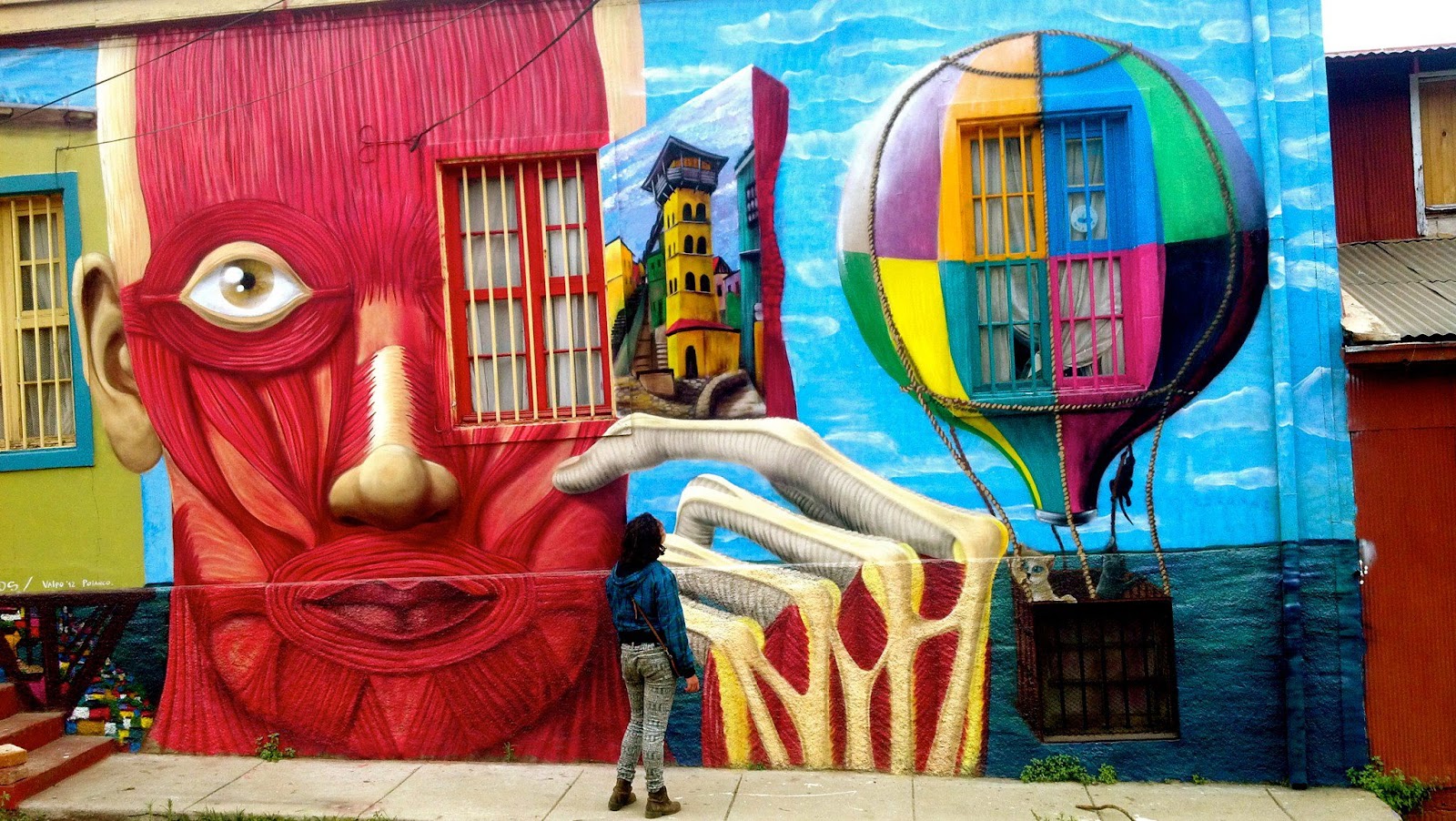
Not only did my language skills grow, but I also grew as a person. I learned to be open to striking up a conversation with someone I didn’t know, and developed a curiosity for other people’s stories. I surprised myself as I began frequently chatting with shopkeepers and neighbors and learning about their lives. I was confident that I could try new things, fail a few times, and still try again and succeed. Let’s just say that I finally got a successful round of photos developed in my photography class. I became more independent -- I could navigate challenges by myself, like traveling alone. After awhile I became accustomed to wandering around alone in the safer neighborhoods of the city, looking at murals. Most significantly, I learned that “home” is more than just the place you grew up. I found another home in Chile, and moved back there after study abroad-- and hope to move back in the future.

I am not the type to keep a journal. I have notebooks from when I was younger with two or three days’ worth of journal entries followed by empty pages. Adults and former study abroad classmates told me I should really keep a blog while abroad, and I blew them all off. I told myself that it wasn’t worth it to start something that I would probably end up giving up after two weeks. Plus, who would want to read my blog anyways?
860346_4759052687909_1034160083_o.jpg
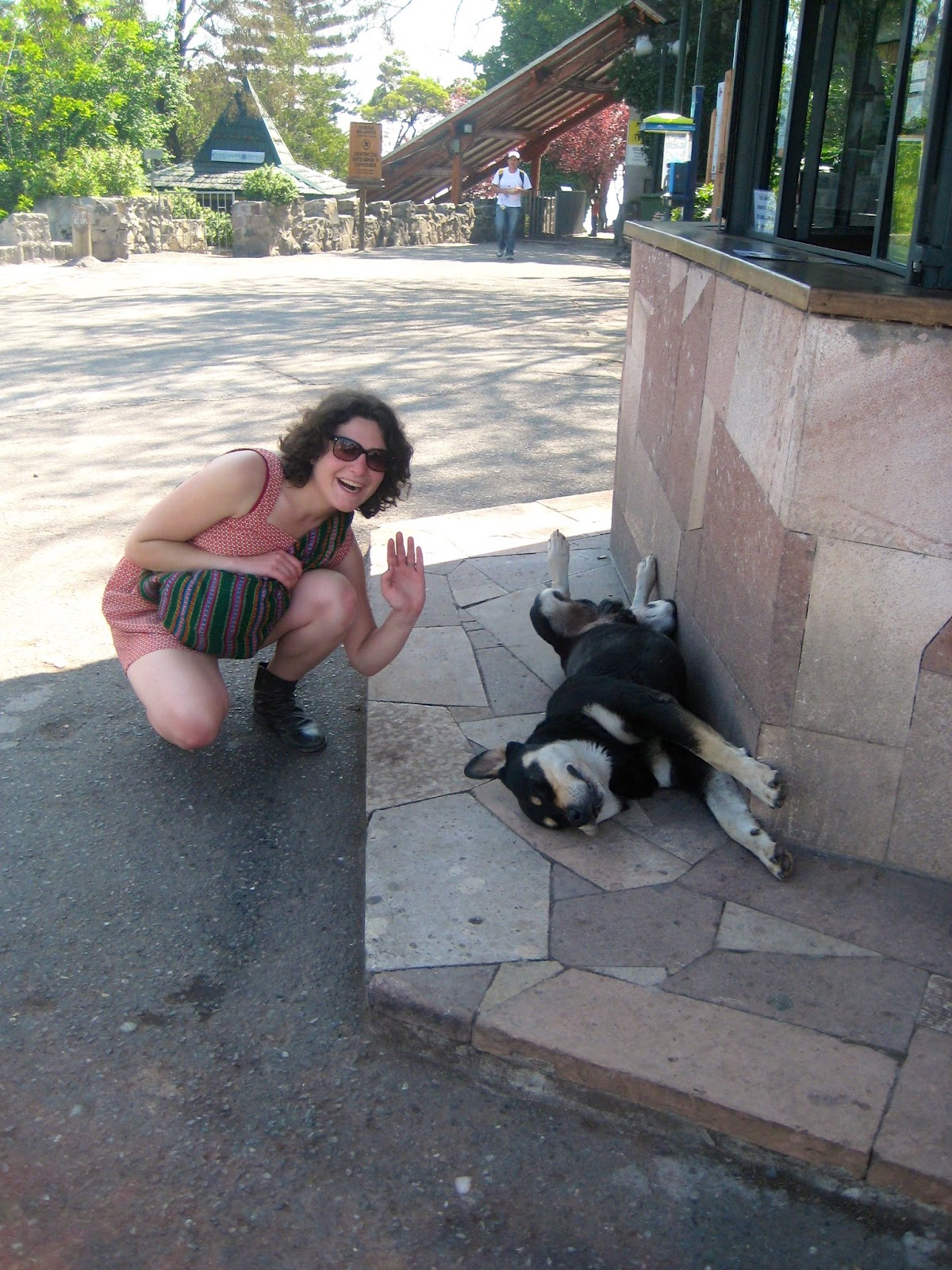
Maybe if I had had a blog, I wouldn’t have had to keep repeating: “I’m not kidding! The street dogs are so friendly it’s ridiculous!”

If only I had known how much I would regret this decision! So I am here to tell you, before you depart on your own adventure, or even if you are already there: write a blog while you are abroad! Your future self will thank you. Here’s why:

  1. Writing is an outlet. You’ll have tough times while abroad, just like I did. Writing about your challenges is a way to reflect and put things into perspective. I used to get embarrassed whenever I had a total language fail, which was every day for the first month or so. Like when literally every time I got on the bus and tried to tell my driver that my stop was “Reloj de Flores,” I would butcher the words so badly that the bus driver had to ask me: “Von Schroder?” “Reñaca?” “Recoleta?” Yes, it was that awful. I wish I could have written about these moments in a blog not only to get some perspective as part of my journey, but also to get some support from my readers back home. Suffering silently tends to make things worse, not better!
  2. You’ll please your people back home. You could spend all day talking to people back home, but the best times you’ll have will be when you’re living in the moment. Some personal messages are great, but it takes a lot of time and energy to stay connected with all of your friends and family. Rather than sending out individual messages about your incredible weekend trip and writing the same blurb 19 times, invite all your friends and family to read about it on your blog. They will be thrilled to follow your adventures, and they’ll also rest easier knowing that you’re doing well. You’ll get to show your friends what you are up to along the way, so you can catch up easily when you get home.
  3. You’ll record your victories, big and small. Give recognition to all of your accomplishments, from making your first local friend, successfully chatting about culture with a member of your host family, or participating in a class discussion (in another language!). Writing about this in your blog reminds you that you are reaching milestones. You’ve earned it, so give yourself some props on your blog.
194717_4145380346833_881309735_o.jpg
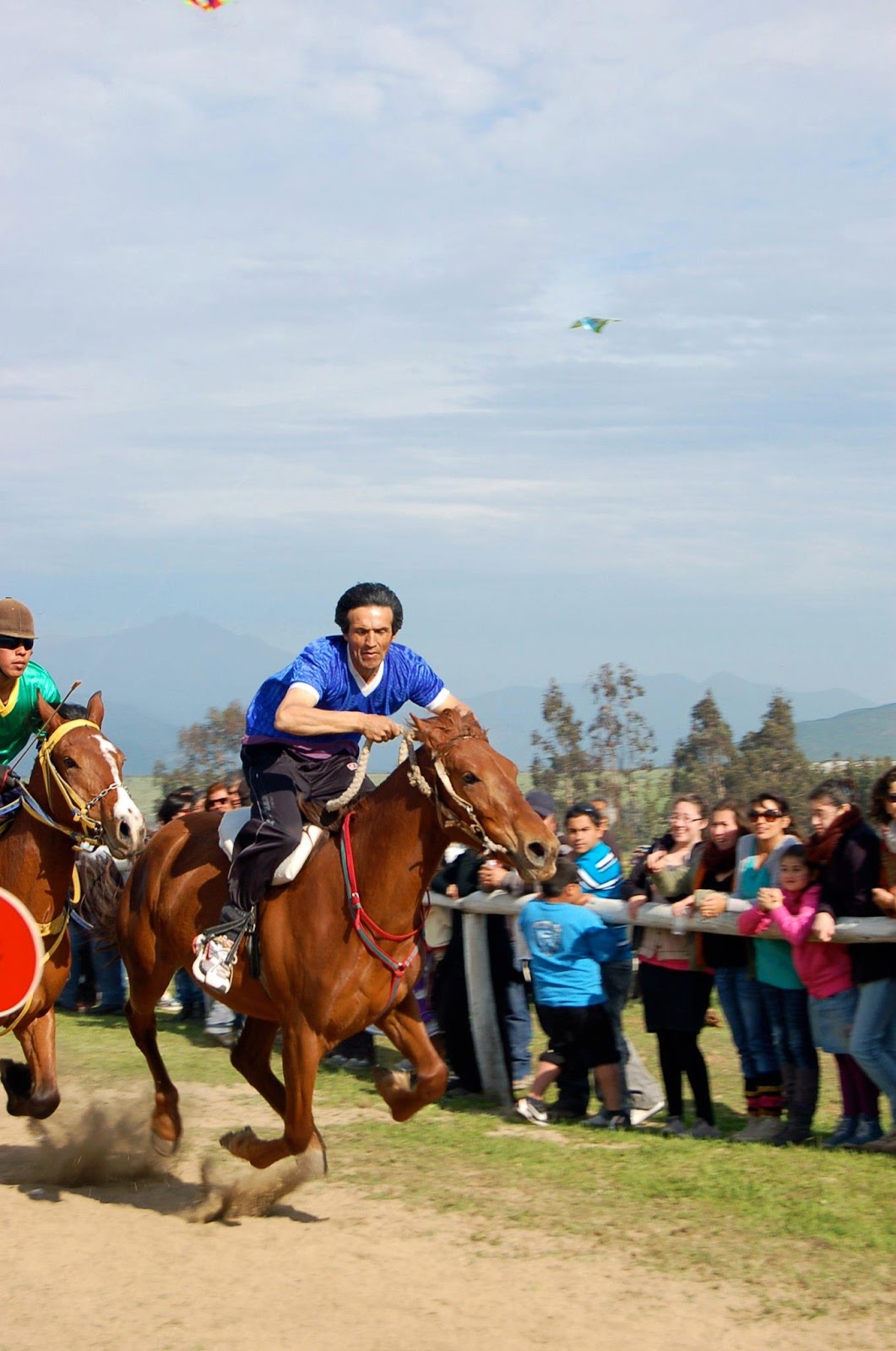
Show off your photo-taking skills! You’ll impress yourself with what you can capture on your camera. This impressive shot of a helmetless and saddleless horse race during “patriot week” would have been up on my Chile blog right away.

  1. You’ll use all of those awesome photos you take. Photos are always attached to a story and shouldn’t go to waste. If you use social media, you know it’s easy to post a few pictures on Instagram and leave the others sitting in storage on your computer. I have thousands of precious photos from 7 months abroad. Photos are best when they are put to use, and a blog is the place for that... since I am pretty sure that no one is sitting at their host family’s house scrapbooking (though if you do, more power to ya!). Even if you are not big on writing or don’t want to share journaling on a public blog, keep a photo blog and let your pictures tell the story.
  2. You’ll have a keepsake that you’ll never lose. I have some pairs of llama socks missing their partner, some broken keychains, and a faded mug. Anything you buy in a market won’t do your trip any justice. I had a hard time leaving Chile and all the friends I made there, and I wish I had had a blog to reminisce about when I got home. Whether it is the day after your return or years after, you’ll have the blog to look back on for a little slice of the country you called home for a few months.

256179_4145373466661_503822110_o.jpg
Everyday stuff is just as important and fun to write about as sightseeing. I could have done a whole post on just the many carnivorous cookouts just like this one!

  1. You’ll stay inspired! Remembering time abroad will remind you of the self-discovery and magic of living abroad and getting to know a new culture. Most likely after going abroad, you’ll be inspired to travel and expand your horizons even more. This can get lost in the transition to college, trying to get a job, and the humdrum of the day-to-day back in your home country. Even if you can’t travel for many months or years after, the blog will remind you of what you got out of seeing a new culture and will inspire you to keep on exploring the world.

To everyone who told me to keep a blog abroad, I’m nodding my head to your “I told you so’s.” All I can do now is try to convince all the future world travelers to keep a blog. You’ll thank yourself later, I guarantee it.

Tuesday, December 11, 2012

Harsh Language

A few weeks ago, I received a phone call from a local coordinator. One of our students (let’s call him Tim) from South Korea told another kid that he was “going to kill him.” This other student had lent Tim a pen, and when the student took it back from him, Tim threatened him. This was not the first time that Tim had made such a strong statement. In fact, Tim has a reputation for losing his temper and saying harsh things. My first response was to send him home; a student that has an uncontrollable temper is not prepared for the exchange experience, which requires maturity and self-control, among other traits.

Later that week, I received an email from one of our partners in South Korea. I had written to her because another student (let’s call him James) from South Korea has been staying up very late and oversleeping every morning. The partner had spoken to his mother and translated the conversation for me. According to my partner’s translation, the natural mother, upon hearing the news of her son James, told her “I am going to kill him – I will kick his ass!”

 This led me to think: are Americans more sensitive to threats because of recent violence in schools and a culture of high homicide rates? I don’t know the answer. I haven’t designed a study to test this, but my hunch is that the answer is yes. This is not the first time that one of our boys from South Korea has been in trouble for using threatening language. In fact, this is an issue that we have had with South Korean students every year since I started in 2010. And yet, according to the United Nations Office on Drugs and Crimes (UNODC), the homicide rate in South Korea is about half of our homicide rate. After researching online, I was not able to find evidence of school shootings in Korea.

 This is not to say that South Korea is immune from violence. To the contrary, violence in South Korea is on the rise. Moreover, two recent school shootings in the U.S were perpetrated by native South Koreans (the Virginia Tech Shooting in 2007 and the Oakland Shooting in 2012). But perhaps South Korean culture does not shun threatening, harsh language because Koreans realize that it rarely leads to action. Threatening language has become part of mainstream discourse. Why else would a mother respond with those appalling words to a seemingly minor issue?

 Cultural differences are mostly celebrated in the Quest International Program. However, every once in while, we learn there are certain habits and cultural tendencies that are incompatible with American culture and society. As educators who are invested in international education, it is our job to edify our exchange students to these incompatibilities. Sometimes they are just not obvious.

 I am not sending Tim home. I spoke to him last week and explained to him that we, Americans, do not tolerate statements like I am going to kill you. When I asked him if threatening language like this is a big deal in South Korea his answer was, not surprisingly, “Not at all. But I have learned that I cannot say that here.” My fingers are crossed that Tim has learned and internalized this very important lesson.

Friday, September 16, 2011

Tips for Making Friends in the U.S.

Americans are extremely friendly people. They are outgoing, polite, will say hello when they meet someone new, and will always ask you how you are doing... However, it is sometimes confusing for foreigners to understand that people in the U.S. seem so friendly up front when you are not actually close with them. Often, foreigners may think that Americans can be superficial in their interactions, but this is not the case at all! Initial friendliness or inquiry about your day is just the American way of being polite or saying hello, even if it does not always indicate a deeper connection. In the U.S., people often use the phrase "being acquaintances" to describe this sort of interaction with people you know but not very well. An acquaintance is someone you have literally just "become acquainted with". You probably see them in your daily day and they will always greet you, but they have not yet become a genuine friend of yours. In the school setting, acquaintances often form because of the fact that throughout a day, students in American schools will be in many different classes with entirely different groups of people all day long, so it is important to be friendly with all the people around you, but it is nearly impossible to become friends with everyone. In America, if you would like to make a new friend and really get to know someone, you just have to be assertive about it. Putting in the effort to build a close relationship with them is something you will never regret!

Thursday, August 25, 2011

SO MANY AMERICAN SITES TO SEE!

Coming to the United States as an exchange student is an incredible opportunity to see some of the amazing sites that the country has to offer. No matter where you may be going to studying in the US, there will be something in your neck of the woods or within traveling distance that you will not be able to pass up seeing! Here are a few of the good ones:

The Statue of Liberty: Colossal statue located in New York City, originally given to the US by France.
Statue of Liberty


Times Square: Bustling part of New York City, flooded with stores, lights, billboards, and people from around the world.


Niagara Falls: Gorgeous waterfalls bordering Canada and the US.


The Grand Canyon: A geographically incredible region of Arizona shaped by beautiful canyons and scenery.
Grand Canyon

The Washington Memorial: Monument in Washington D.C. created to commemorate President Washington.


The Golden Gate Bridge: Scenic bridge full of bike riders, tourists, and San Franciscans alike.


Fisherman's Wharf: Well-known attraction in San Francisco bustling with people viewing shops, enjoying the waterfront, and filling up restaurants.


The Space Needle: Unique feature of the Seattle skyline with a view of the entire city, originally created for exposition in the World Fair.


Yosemite National Park: Awe-inspiring national park located in California.


The Plaza: Unique part of Kansas City, designed with architecture, tiles, and fountains to portray Seville, Spain.


Walt Disney World: Located in Orlando, Florida, a must see for any fun-going student.


Rocky Mountain National Park: Ideal location in Colorado for camping, hiking, and outdoor activity.


Monday, July 11, 2011

WORRIED ABOUT CULTURE SHOCK?

When you're away from the people, traditions, foods, language and environment that you are used to, it's natural that you will feel a little overwhelmed - we call this culture shock, and culture shock can be rough! Here are a few tips for how adjust to your new surroundings:

1. Be aware that culture shock is bound to happen! You may hit a time where you just aren't feeling like yourself, and this is probably it.

2. Be curious about your new location. The best way to feel less shocked it by exploring your new world.

3. Make a friend. Sometimes it takes just one person to make you feel just a little bit at home. Having someone to talk to takes away a surprising amount of the stress of moving to a new country.

4. Don't be afraid to ask for help! People can often surprise you - if you ask for help, they will probably be curious about you, your country, and where you are from, in addition to telling you about themselves.

5. Keep up with your friends and family at home with a quick email or Skype conversation.

6. Realize that some things about your new life are just different, and maybe even hard. Try to embrace them!

7. Try new foods. One of the most fun things about being in a different countries is the food that you would never have seen at home.

8. And finally, learn patience. Be patient with yourself and also with the new things around you. Before long, your new country will feel like home.