Showing posts with label Exchange. Show all posts

Friday, December 18, 2015

Why I wish I had blogged abroad

471643_4560596046966_1039495037_o.jpg
Studying abroad is inspiring! With a blog, you can revisit these moments and give yourself a boost on a rainy day.


Study abroad was such a magical learning and growing experience for me. I found my second home in 2011 in the coastal city of Valparaíso, Chile. The experience was one of the most significant ones in my entire life, and I can still say this with confidence five years later. But starting out was tough, to say the least…

Even after years of college-level Spanish under my belt, I was lost in even simple conversations. Anyone who has been to Chile will confirm the difficulty of the accents and the very frequent use of slang -- I would estimate at least two or three in a one minute conversation! This made even a simple trip within the city feel like a mission worthy of a seasoned explorer.  Once I was ushered on to the wrong bus not one, not two, but three times before I actually managed to explain where I was trying to go.

Following classes was nearly impossible, and I was living with a family that I couldn’t understand. In my photography class, I was completely lost when my teacher explained the process of developing photos. Let’s just say I ended up with more than one set of overexposed, totally white photos! But believe it or not, I am nostalgic for this time of jumping into the unknown. By the end of the trip, I couldn’t believe how much I had been able to challenge myself and how much I had come to love Valparaíso. I was throwing around slang just like a young Chilean, and I surprised locals by striking up conversations with them.

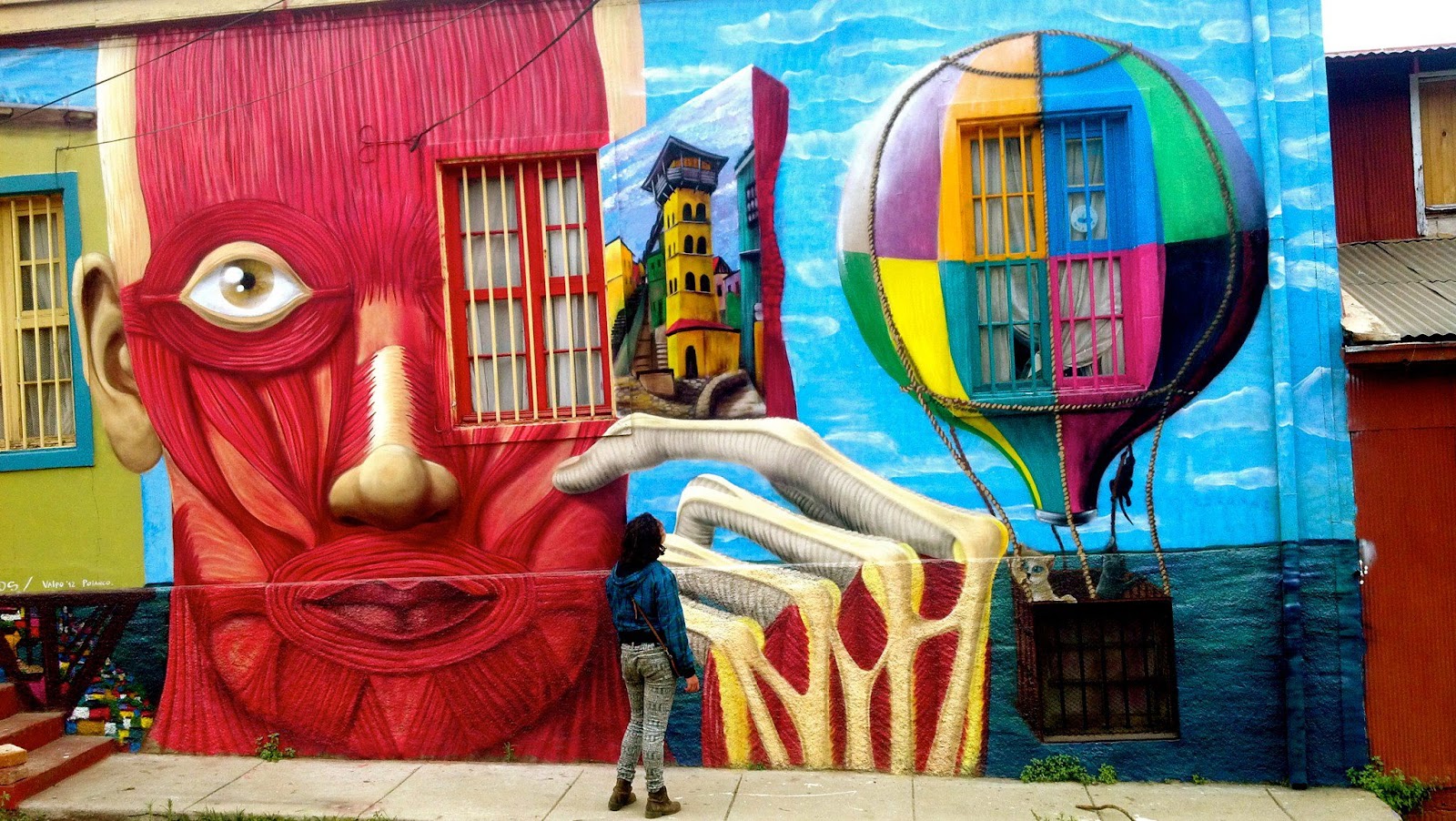
Not only did my language skills grow, but I also grew as a person. I learned to be open to striking up a conversation with someone I didn’t know, and developed a curiosity for other people’s stories. I surprised myself as I began frequently chatting with shopkeepers and neighbors and learning about their lives. I was confident that I could try new things, fail a few times, and still try again and succeed. Let’s just say that I finally got a successful round of photos developed in my photography class. I became more independent -- I could navigate challenges by myself, like traveling alone. After awhile I became accustomed to wandering around alone in the safer neighborhoods of the city, looking at murals. Most significantly, I learned that “home” is more than just the place you grew up. I found another home in Chile, and moved back there after study abroad-- and hope to move back in the future.

I am not the type to keep a journal. I have notebooks from when I was younger with two or three days’ worth of journal entries followed by empty pages. Adults and former study abroad classmates told me I should really keep a blog while abroad, and I blew them all off. I told myself that it wasn’t worth it to start something that I would probably end up giving up after two weeks. Plus, who would want to read my blog anyways?
860346_4759052687909_1034160083_o.jpg
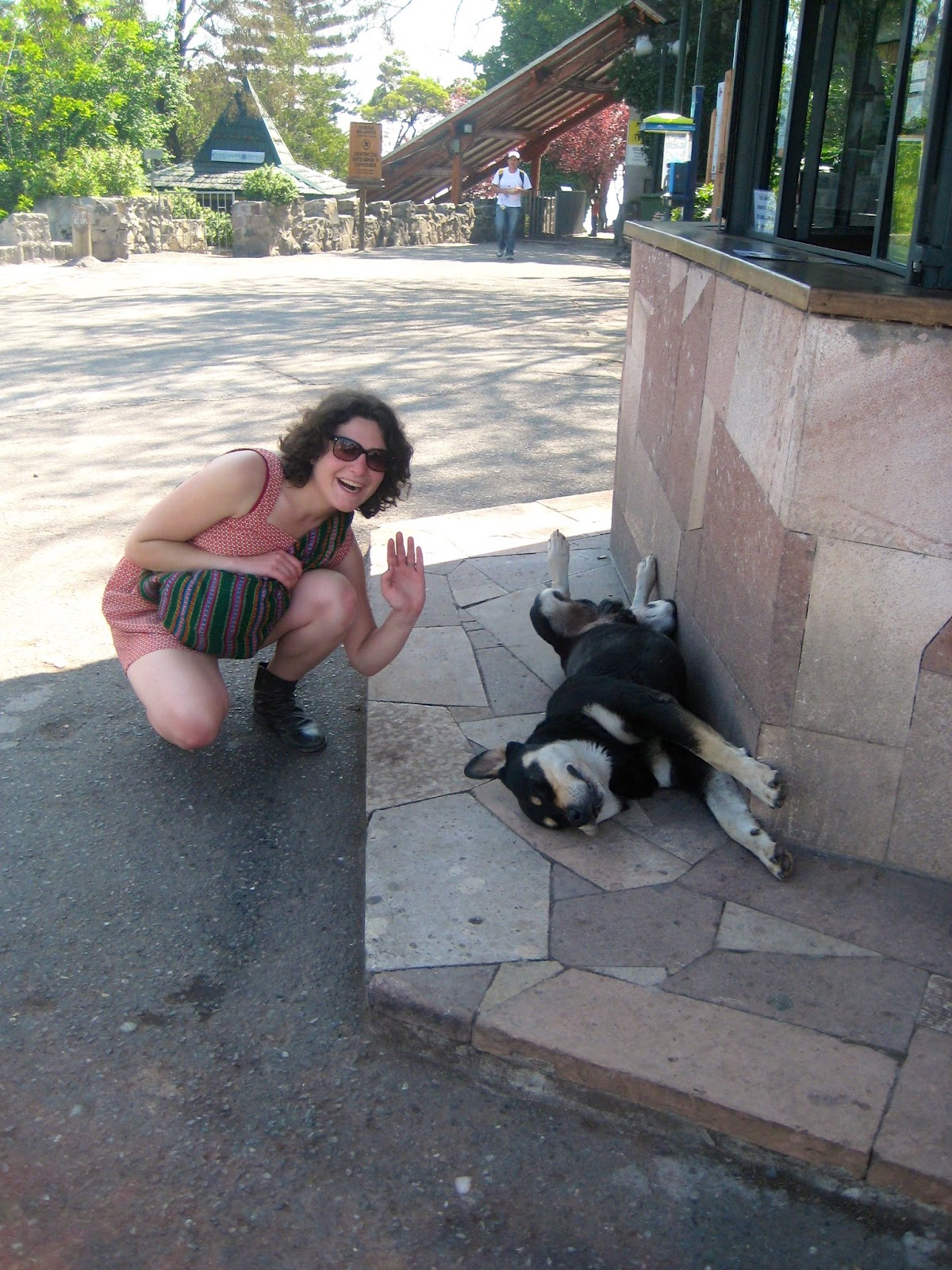
Maybe if I had had a blog, I wouldn’t have had to keep repeating: “I’m not kidding! The street dogs are so friendly it’s ridiculous!”

If only I had known how much I would regret this decision! So I am here to tell you, before you depart on your own adventure, or even if you are already there: write a blog while you are abroad! Your future self will thank you. Here’s why:

  1. Writing is an outlet. You’ll have tough times while abroad, just like I did. Writing about your challenges is a way to reflect and put things into perspective. I used to get embarrassed whenever I had a total language fail, which was every day for the first month or so. Like when literally every time I got on the bus and tried to tell my driver that my stop was “Reloj de Flores,” I would butcher the words so badly that the bus driver had to ask me: “Von Schroder?” “Reñaca?” “Recoleta?” Yes, it was that awful. I wish I could have written about these moments in a blog not only to get some perspective as part of my journey, but also to get some support from my readers back home. Suffering silently tends to make things worse, not better!
  2. You’ll please your people back home. You could spend all day talking to people back home, but the best times you’ll have will be when you’re living in the moment. Some personal messages are great, but it takes a lot of time and energy to stay connected with all of your friends and family. Rather than sending out individual messages about your incredible weekend trip and writing the same blurb 19 times, invite all your friends and family to read about it on your blog. They will be thrilled to follow your adventures, and they’ll also rest easier knowing that you’re doing well. You’ll get to show your friends what you are up to along the way, so you can catch up easily when you get home.
  3. You’ll record your victories, big and small. Give recognition to all of your accomplishments, from making your first local friend, successfully chatting about culture with a member of your host family, or participating in a class discussion (in another language!). Writing about this in your blog reminds you that you are reaching milestones. You’ve earned it, so give yourself some props on your blog.
194717_4145380346833_881309735_o.jpg
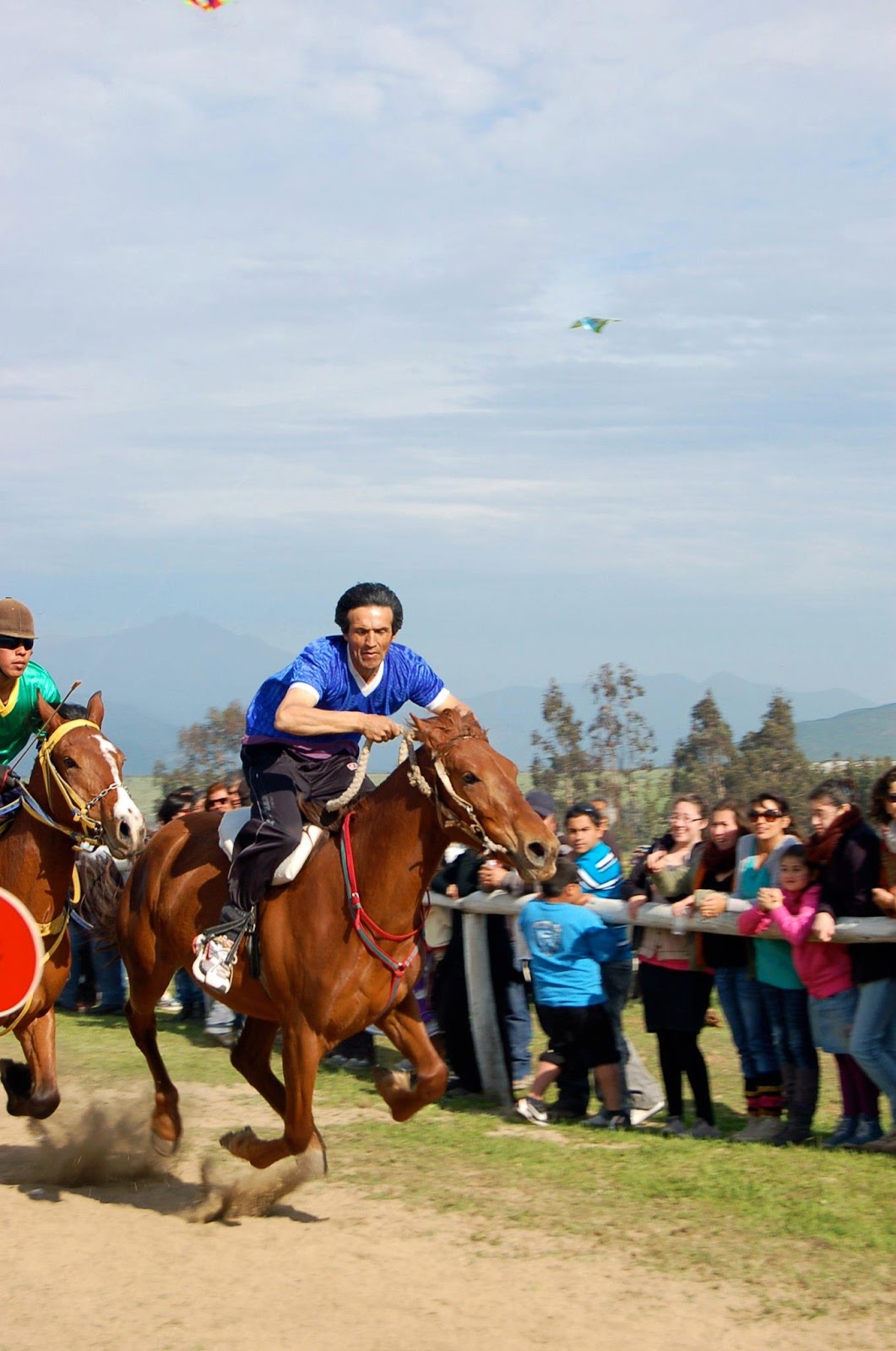
Show off your photo-taking skills! You’ll impress yourself with what you can capture on your camera. This impressive shot of a helmetless and saddleless horse race during “patriot week” would have been up on my Chile blog right away.

  1. You’ll use all of those awesome photos you take. Photos are always attached to a story and shouldn’t go to waste. If you use social media, you know it’s easy to post a few pictures on Instagram and leave the others sitting in storage on your computer. I have thousands of precious photos from 7 months abroad. Photos are best when they are put to use, and a blog is the place for that... since I am pretty sure that no one is sitting at their host family’s house scrapbooking (though if you do, more power to ya!). Even if you are not big on writing or don’t want to share journaling on a public blog, keep a photo blog and let your pictures tell the story.
  2. You’ll have a keepsake that you’ll never lose. I have some pairs of llama socks missing their partner, some broken keychains, and a faded mug. Anything you buy in a market won’t do your trip any justice. I had a hard time leaving Chile and all the friends I made there, and I wish I had had a blog to reminisce about when I got home. Whether it is the day after your return or years after, you’ll have the blog to look back on for a little slice of the country you called home for a few months.

256179_4145373466661_503822110_o.jpg
Everyday stuff is just as important and fun to write about as sightseeing. I could have done a whole post on just the many carnivorous cookouts just like this one!

  1. You’ll stay inspired! Remembering time abroad will remind you of the self-discovery and magic of living abroad and getting to know a new culture. Most likely after going abroad, you’ll be inspired to travel and expand your horizons even more. This can get lost in the transition to college, trying to get a job, and the humdrum of the day-to-day back in your home country. Even if you can’t travel for many months or years after, the blog will remind you of what you got out of seeing a new culture and will inspire you to keep on exploring the world.

To everyone who told me to keep a blog abroad, I’m nodding my head to your “I told you so’s.” All I can do now is try to convince all the future world travelers to keep a blog. You’ll thank yourself later, I guarantee it.

Wednesday, November 21, 2012

Thanksgiving: a Worldly Holiday


Because eating is among my most prized activities, Thanksgiving has always been one of my favorite holidays.  Thanksgiving is like the cherry on top of the fall season; it’s the finishing touch on the masterpiece that is fall. With vibrant leaves and rich, hearty fruits and veggies, such as squash, green beans, and yams, the fall season culminates at Thanksgiving.

We are taught in the U.S. that Thanksgiving was about the pilgrims and the “Indians” setting aside their weapons for one day and sharing a meal together.  The original Thanksgiving meal supposedly celebrated a bountiful harvest during that particular year. While I believe that story and I respect the historical significance, I think the holiday is more about gathering together with family and friends and recognizing all of the blessings that we have in this life. Specifically, we celebrate and show gratitude for food. In this way, it is not distinctly an American tradition.  Rather, this is something to which anyone from any part of the world can relate.  This thought led me to wonder: do other countries celebrate Thanksgiving?

A quick search on Google led me to the following results about celebrations of thanksgiving in a few of the countries from which QuestInternational receives exchange students.

China
The Chinese celebrate their version of Thanksgiving, Chung Ch’ui , on the day when the full moon falls within the 8th month. The traditional meal includes a roasted pig, and several other traditions accompany this three-day ceremony. The celebration focuses on the idea of the bountiful harvest.

Korea
The Korean celebration of Chuseok, like Chung Ch’ui in China, is a three-day festival. It takes place during the Autumn Equinox.  In celebration of harvest, Koreans typically return to their birth-towns and celebrate with traditional food and variations of their famous rice wine.

Germany
Emtedankfest, or the Harvest Thanksgiving Festival, is celebrated in early October, usually on the first Sunday. The celebration is usually centered at the Protestant  Johannesstift Church in Berlin, and includes a few religious services, food, dancing, and a lantern and touch parade.

Canada
The Canadian Thanksgiving is held on the second Monday in October.  Some historians claim that the celebration dates back to 1578 (for context, the U.S. holiday was said to have originated in 1621) when the explorer Martin Frobisher arrived in Canada on an exploration for a northern route from Europe to Asia.

While the distinctly American tradition of eating turkey, mashed potatoes, gravy, and squash on the fourth Thursday of November might be a new experience for our students, the celebration of giving thanks for the gift of food and family will be quite familiar.  If you would like to elaborate on any of the traditions outlined above, or share your own culture's version of Thanksgiving, please leave us a comment - we would love to learn more!

We wish students, host families, coordinators, and our school partners a wonderful day tomorrow.  We are grateful for everyone who helps to make this program a success!

Friday, November 16, 2012

Economic Crisis Spur Spaniards to Prepare for a Different Future


It’s hard to avoid the headlines these days about the turmoil and unrest in Southern Europe, namely in Greece, Portugal and Spain. Truly, economic indicators in Spain are bleak.  Unemployment has been hovering around 25 percent since January 2012, and unemployment for residents under the age of 25 is estimated at over 50 percent. With echoes from the US presidential election, whereby the discourse focused on the “deplorable” unemployment rate of 8 percent, it’s hard to imagine a world in which one in four of your adult friends are without work.
With the burst of Spain’s own housing bubble in 2008, international factors like the imminent recessions in the U.S. and Eurozone only contributed to a rapid downward spiral that has essentially lasted until today.  Spanish banks, once noted for their trustworthy, conservative practices, loosed restrictions during the housing bubble to encourage more home-ownership; therefore a financial crisis accompanied a recession in 2008 (very similar to what we experienced here in the U.S.). The announcement of a European bail-out plan this past summer calmed some fears that this important European economy would fall further into crisis. Of course, austerity measures are part of the plan, and this threatens to slow the recovery with sharp reductions in government spending or “stimulus.” Some forecasts say that there won’t be any improvement in Spain until at least 2014.

Spain has been noted, and often criticized, for its very liberal immigration policies compared to its European neighbors. Typically a large recipient of mass-immigration, especially in the early 2000s from South American nations, Spain today is experiencing net emigration, with residents seeking opportunities and employment abroad.  According to estimates by the Spanish National Statistics Institute (INE), approximately 178,021 immigrants came to Spain in the first 6 months of 2012, and approximately 269,515 emigrants left the country, seeking opportunities abroad during that same period.  Foreign workers from Ecuador, Venezuela, Argentina, and Colombia are returning home to find more opportunities in their growing South American economies.

How will this affect student exchange from Spain?  One might think that a weakened economy might lead to families tightening discretionary spending and opting not to send their students abroad. However, Quest International is seeing noticeable signs that high school student exchange is following emigration patterns: that is, the number of students seeking exchange experiences is seemingly increasing!  According to one of our trusted partner agencies, Spanish residents are considering every and any opportunity to advance their education and employment prospects.  This means that learning and perfecting English language-abilities and immersing themselves in a new culture are overt goals of more and more Spanish residents. They see abroad experiences as the key to a successful future both for themselves and for Spain on a whole.
QuestInternational is currently developing a short-term academic program, whereby students will come during the academic year for programs that last 1 to 3 months.  The idea is that younger students can have an American experience without committing to studying for a full year or a semester overseas.  They can enjoy a flavor of life in the US, practice their English skills, and engage with an American family.  Initial responses from Spain are quite positive, and in fact, there are already organized groups of students ready to come to the US as soon as we give them the go ahead!

Quest International values our partnerships in Spain as well as our vibrant Spanish students that we receive yearly into our F1 program.  While we certainly empathize with the dire economic conditions that Spain faces today, we are encouraged and inspired to learn that Spanish residents are looking to the future and investing in their own education and cultural experiences. We agree that this will pave the way for better individual career opportunities and a better Spain on the whole. We are excited and honored to help develop affordable and enriching programs for both children and adults seeking experiences in the U.S.  Please contact us at info@questexchange.org if you would like to play a role in developing an exchange program for Spanish students in your community!